
"Sometimes big fish want a snack and not a meal," he said. "Think about Thanksgiving. You've just eaten a big meal and you're completely stuffed, but you go by the table and you see some desserts. Which are you going to grab, a cookie or a big piece of pumpkin pie?"
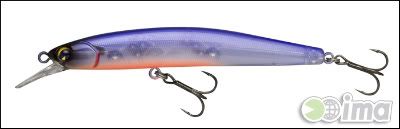
His point is that the overstuffed gluttons among us can't resist, but on those occasions when there's only a little room left to fill it's the bite-sized morsel that's going to get us every time. Big bass are the same way. They want to eat all the time, but sometimes it's the little temptations that are deadliest. This is the primary reason why the engineers at Ima made the decision to add a 100-sized bait to the wildly successful Flit 120. Together, they're a dynamite combination for your jerkbaiting needs -- like a sharp left jab and a brutal right hook -- ready to put fish in your livewell under almost any conditions.
While the 120 outperforms its competition and can be used it an exceptionally wide range of circumstances, Murphy said that its little brother adds to its versatility. He wouldn't want to be without either one in the boat at any time.
"Here's the lowdown," he explained. "The 120 is a typical, popular three-hook design. It's made for fishing on the highways the fish use, the migration routes and channel swings."
But on lakes like Guntersville, where the grass flats top out four feet under the surface, at times the Flit 120 is too much. If you need a shallower diving model, or the forage is small, "this bait makes a lot of sense," Murphy concluded.
So other than when you want a shallower diver, when is the Flit 100 your top choice? Murphy flips the question around on you -- When don't you want it on the deck? -- he always has both models of Flit ready in the rod locker. With the smaller bait, the key factors are smaller prey size and less aggressive fish. The size and species of the dominant forage is a constantly changing variable throughout the year -- you can be in the right place, but if you're off by an inch or so in "matching the hatch" you can miss the boat. Too big and you'll miss out, but the reverse is true, too -- baits that are too small sometimes won't get the attention of even the most ravenous fish. Thus the need for two different Flits, even though they're similar in other ways.
"It's designed to move the same as the 120, but on a smaller scale," Murphy said about the Flit 100. "The walk is not as severe. It only has half the twitch and it doesn't have as much sound because there aren't as many BBs and they're in two chambers instead of three. It's a softer, less intrusive version of the same bait. It's the same kind of ping, but at times when the fish are skittish, it's possible to get too much sound."
While many anglers think of jerkbaits as tools for cold weather leading into the spawn, Murphy says that given the right circumstances, they can be killers 12 months out of the year. After all, the thin minnow profile is undeniably tempting to bass from coast to coast and around the world.
"I just feel comfortable throwing it all year long," he said. For example, while other anglers used "texposed" soft jerkbaits at an FLW Series tournament on Clarks Hill this past fall, Murphy avoided the frustrations caused by missed strikes by substituting the new Flit. "You can fish it in many more ways than other jerkbaits," he added. "A lot of times with a jerkbait they'll just slap the tail end of it. With this lure, if they even graze it, they're hooked."
The number one gripe of hard and soft jerkbait fishermen everywhere is bass that follow but don't strike. One moment, you have a water-borne missile that's making a charge for your lure, the next minute she's sinking back into the depths. In designing the Flit, Murphy and the entire Ima team took this into consideration.
"You can make it do a 180 and persuade that strike to happen," Murphy said.
Around docks on lakes like perennial FLW Tour stop Lake Norman, Murphy said the fish get so accustomed to following other lures like flukes and paddletail swimbaits, that it often takes something different to get them to strike. "They're educated. After someone fishes the dock you have to leave them alone for an hour and come back. You have to trigger the strike, but if they swipe at it one time, you'll get them hooked up. For that reason, it's great for going behind people."
While the 100 doesn't dive more than about five feet deep, like its big brother it's deadly over deep, clear water. On lakes like Champlain (on the Vermont/New York border) or Murray (near his South Carolina home), Murphy uses the flit to call up big largemouths and smallmouths out of extremely deep water. Let forage size and the depth at which the fish are suspended be your keys in determining which Flit to throw.
"On Murray I've caught them over 30 feet of water," he said. "You'll have a rockpile at the end of a long point so the bottom comes up to 25 feet with 10 or 12 foot clarity. They'll suspend between the structure and the surface and you can catch more fish with the Flit than you can by fishing underneath the fish."
It's also deadly in the coldest part of the year. While others toil away in a deer stand or a duck blind, Murphy can often be found as the lone figure on the lake, mopping up bass as if they've never seen a lure. Right now is when you need to be out there, he said. "It's winter and turnover is done but we haven't had a big shad die-off. The bait is in the coves where the fish have them corralled. They're about three-inches long, mainly the young of the year. On lakes like Old Hickory, they're so thick you can almost walk across the water on the shad. Crankbaits, poppers and spooks don't match the hatch. Not only does the Flit 100 match the hatch, but you can walk it back and forth six or seven times in a three foot pull." It's that type of torture that often pulls in the biggest fish of the year. The strikes are sometimes subtle -- just a "tick" or a slow swimming away -- but when you rear back the fight is on.

No comments:
Post a Comment